Water Research
Through our award-winning research in water, Carleton contributes to the greater good of society, its economy and institutions, the health and well-being of all citizens, and the environment that surrounds us. Our university is home to the Global Water Institute, and over 100 water researchers from a variety of disciplines. Together, we are developing innovative solutions to the greatest challenges of this century – providing safe water, adapting to a changing climate, balancing economic development with environmental conservation, and meeting the needs of a growing population – and helping build a brighter, more sustainable future for humankind.

Some of our distinguished faculty:
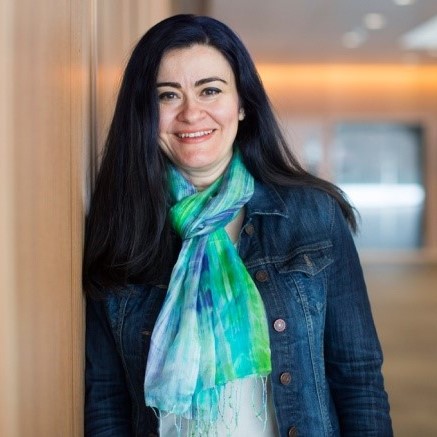
Environmental engineer Banu Örmeci is the Jarislowsky Chair in Water and Global Health, a Canada Research Chair in Wastewater and Public Health Engineering, and the Director of the Global Water Institute. She leads an internationally recognized research program on water and wastewater treatment, biosolids treatment and management, public health engineering, disinfection and fate of pathogens, removal of chemical contaminants, process optimization, and development of sustainable treatment processes for First Nations and remote communities. She is also involved in international research and development projects.
Environmental Scientist Steven Cooke is Canada Research Chair in Fish Ecology and Conservation Physiology. Much of his research program is focused on understanding the threats facing inland fish and fisheries around the globe and identifying solutions, which also requires interactions with social scientists to understand the human dimension. Cooke is also Director of the Canadian Centre for Evidence-Based Conservation and Environmental Management which conducted evidence synthesis activities to inform policy and management.
Geographer Stephan Gruber is the Canada Research Chair in Climate Change Impacts/Adaptation in Northern Canada. His expertise is in cryospheric systems, and developing methods to anticipate and quantify the impacts of local human activity and global climate change on geohazards and natural systems.
Hydrogeologist Richard Amos was part of the team that received a recent NSERC Synergy Award for Innovation for his ongoing collaboration with Diavik Diamond Mine. He specializes in mitigating the impacts of mining and industrial activity on water resources, and remediating contaminated sites.
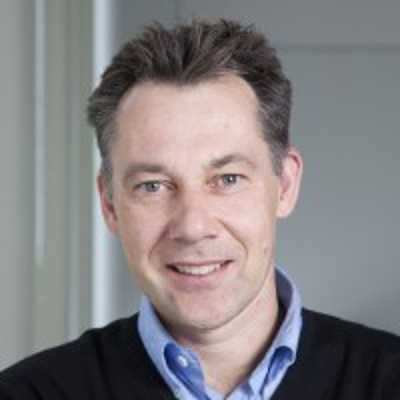
Policy analyst Stephan Schott’s research revolves around applying sustainability principles to energy systems, natural resource management and economic development. He is currently working with Genome Canada, Polar Knowledge, Can Nor, the HTO of Gjoa Haven and the Government of Nunavut on issues of food security and sustainable fishery development.
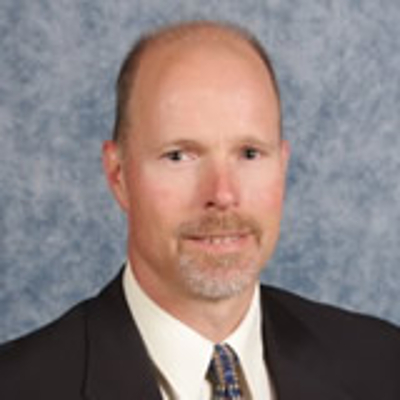
Hydrogeologist Paul Van Geel specializes in water flow and transport in the saturated and unsaturated zone, with applications in remediation and waste management. In addition to his research activities, he is also the lead person for the Carleton Green Roof Teaching and Learning Centre, a project with the goal of demonstrating the water and energy benefits of green roofs in the Ottawa northern climate.
A few of our cutting-edge facilities:
- The Carleton Water Research and Microbiology Lab (CWRM)
- The Water and Ice Research Lab (WIRL)
- The Fish Ecology and Conservation Physiology Laboratory (FECPL)
- The Canadian Centre for Evidence-Based Conservation and Environmental Management (CEBCEM)
- The Carleton Mass Spectrometry Centre (CMSC)
- Aquatic Ecosystems and Environmental Change (AEEC) Lab
Selected Projects and Partnerships:
Carleton University has established strong ties with the federal and provincial governments, industry partners, non-profit organizations, research institutions, and international water networks.
- Jesse Vermaire is working with NSERC, Ottawa Riverkeeper, and the Gatineau Wastewater Treatment Plant on a project to determine the sources of microplastics in the water supply and the effectiveness of the treatment plant at removing them. These findings will inform technological decisions at treatment plants across Canada.
- Murray Richardson, co-director of Carleton’s Water and Ice Research Lab (WIRL), studies Arctic and sub-Arctic watersheds including water and contaminant cycling, with implications for predictive modelling and long-term forecasting of aquatic ecosystem change. He receives funding from NSERC, the Cumulative Impacts Monitoring Program (Government of Northwest Territories) and the Northern Contaminants Program (Indigenous and Northern Affairs Canada). He works closely with various non-government agencies and communities, including ‘Water First’, an Ontario non-profit organization focused on water science training and research capacity building among Ontario First Nations.
- Derek Mueller, WIRL’s other co-director, examines indicators and impacts of climate change in the cryosphere. His work focuses on Arctic coastal ice, including sea ice, glaciers and ice shelves. He is interested in the impact of meltwater from watersheds on the break-up of coastal ice. He also studies the drift and deterioration of icebergs and more massive ‘ice islands’ that travel south after they break-away from their coastal sources. He is funded by NSERC, Polar Knowledge Canada, ArcticNet and Environment and Climate Change Canada.
- Anh Le-Tuan Pham collaborates with partners in the oil & gas industry and environmental engineering firms to develop remediation methods for contaminated soil and groundwater.
- An interdisciplinary team of faculty co-led by Onita Basu from the Department of Civil and Environmental Engineering, Bjarki Hallgrimmson of the School of Industrial Design, and Troy Anderson of the Sprott School of Business work on issues of Water Access, Water Education and Water Resource Management in rural Tanzania. This project, entitled Buckets to Rainbarrels, includes local community leaders, on the ground NGO TEMBO (Tanzanian Education and Micro-Business Organization), and both undergraduate and graduate students from Carleton.