Carleton Researchers Awarded $1.8 Million USD From Carnegie Corporation of New York
Carnegie Corporation of New York has awarded $1.8 million to Carleton researchers helping to promote peace and cooperation in border areas and refugee communities across Africa.
Across the continent, the conventional approach to migration—driven by the interests of Global North states—is to reinforce borders and confine populations within their territories. In this context, politicians often blame migrants for the socioeconomic challenges facing their countries, affecting the extent to which peace can be achieved and economic development sustained.
What has yet to be acknowledged is the cultural and Indigenous knowledge and practices that can guide these groups, along with the expertise that refugee communities can contribute. To fill this gap, the project, supported by Carnegie’s International Program, will involve a three-year examination of knowledge traditionally excluded in managing cross-border migration in Africa—that is, primarily the experience of Indigenous communities, but also the experience of refugee communities.

“We are very grateful to Carnegie for this partnership to deepen Africa-centred scholarship and inclusive development that has broader global significance on real lives and communities,” said Carleton President and Vice-Chancellor Wisdom Tettey. “The project is another manifestation of Carleton’s standing as a leading global hub of Africanist scholarship, a reflection of its African strategy at work and a demonstration of its commitment to collaborating with like-minded partners to enable inclusive impact and prominence, together.”
Carleton researchers Samuel Ojo Oloruntoba from the Institute of African Studies and James Milner from the Faculty of Public and Global Affairs are leading an international team that includes regional hubs at the Centre for Migration Studies at the University of Ghana, the Refugee Law Project at Makerere University in Uganda and the University of Zululand in South Africa to co-create knowledge that can serve as the basis for new policies and programs for cooperation and exchange in border areas. These policies, when formulated by the governments in the respective regions, will be implemented in partnership with an Advisory Committee that includes representatives of regional organizations and influential non-state actors. Central to the project will be the work of 36 fellows who will document and mobilize the expertise of Indigenous communities and refugees in East, West and Southern Africa border areas.
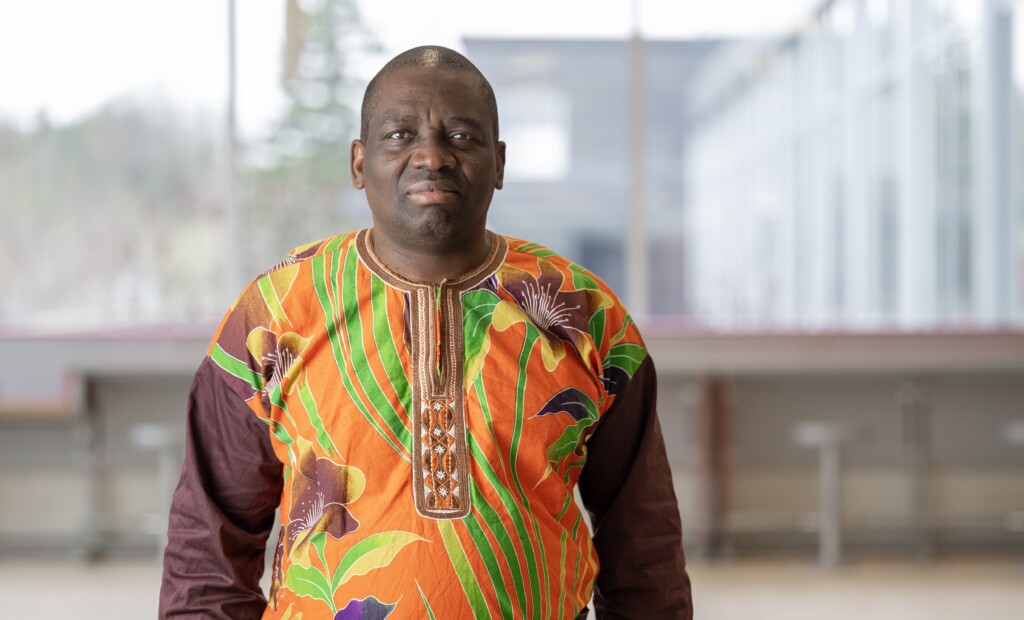
“By the end of three years, the project will have established a new community of practice including 36 fellows, 36 research assistants and 300 researchers working with community, policy and academic partners to sustain the newly established approaches to governance, peacebuilding and development in border areas,” said Ojo Oloruntoba.
The project builds on connections developed through the Africa Indigenous Research Network (AIKRN), funded by the Mastercard Foundation, the Local Engagement Refugee Research Network (LERRN) and the Network of Research Chairs on Forced Displacement, funded by Canada’s International Development Research Centre (IDRC), all of which have their secretariats at Carleton.

“We aim to help bring the knowledge and expertise of Indigenous and refugee communities into direct dialogue with regional organizations and powerbrokers in border areas to encourage innovative approaches to the governance of cross-border movement,” said Milner.
“We are proud to see Carleton researchers being recognized for the global impacts of their research,” said Rafik Goubran, Carleton’s Vice-President (Research, Innovation and International). “This project will be instrumental in helping to shape more inclusive and sustainable development policies in border regions across Africa.”
More Carleton research news: